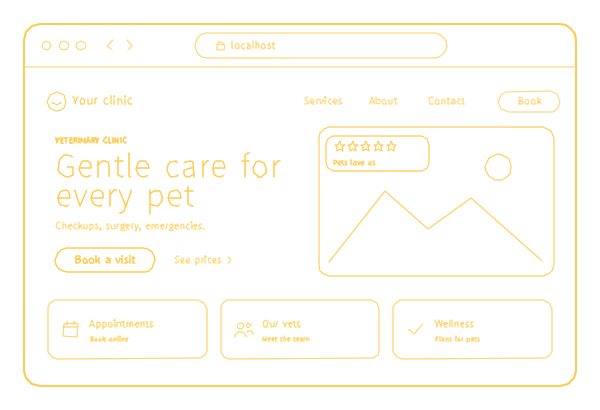
The article
A pet owner rarely opens a vet clinic's website out of curiosity. The cat has stopped eating or the dog is limping, the clinic down the street does not pick up, and the choice is made on a phone within minutes: can you see my animal, when, and where do I go if you are closed.
I have spent 18 years in software development; since 2017 my team of 70+ specialists has delivered 150+ projects, and clients rate us 5.0 on Clutch from 26 verified reviews, as of September 2026. Veterinary care is one of the industries we serve with website design and development. This page covers veterinary website development and what a practice needs from it; our $499 website's terms have a page of their own.
What a pet owner needs on the first screen
Four answers that fit on a phone screen without scrolling:
- Are you open now? Today's hours, holidays included.
- What do I do in an emergency? Your emergency line, or the hospital you send clients to when closed, with its address.
- Do you see my animal? Dogs and cats only, or also rabbits, birds, reptiles or horses.
- How do I reach you? A one-tap phone number, the address and a button to request a visit.
The pages a clinic site needs
For one clinic, all of this stays within the 20 pages of the $499 site:
- Home with hours, the phone, emergency instructions and the request button.
- A page per main service: wellness exams and vaccines, dental care, surgery, diagnostics.
- Species you treat, with a separate page for exotics or birds: those owners search by name.
- New clients: what to bring, how to send previous records, the first-visit form.
- The team: each vet and technician with a photo and the credentials you actually hold, such as AAHA accreditation or Fear Free certification.
- Emergencies and after hours, plus a location page with parking.
- Refills, boarding or grooming, if you offer them.
- A privacy policy: your forms collect owners' names, phones and pets' history.
A second location gets its own page with hours, phone and team. The structure is close to a dental or medical practice site, except that your patients cannot say what hurts.
Booking, refills and payments
A request form comes with the site: the owner's phone, the pet's name and species, the reason for the visit. Ask any developer what happens to a request when email fails; on BND, an accounting firm's site we built, each one is saved first, then sent.
- Owners pick a free slot themselves: plus $500 for booking, or a button that opens your practice software's own booking.
- Deposits for surgery or boarding, or invoices paid online: plus $500 for payments.
Before refills or online consultations appear on the site, ask your compliance advisor whether your state's rules on prescriptions, telemedicine and client records limit what such a form may collect and promise.
How owners find a vet nearby
They type what they would say: "emergency vet open now", "cat vet" or "exotic vet" plus the town. Three things help:
- A Google Business Profile whose hours, holidays included, match the site.
- A page per service and species, so a page answering "rabbit vet" plus your town exists.
- Reviews: Google says both their number and their score feed into local ranking.
Basic SEO comes with every page we build; distance and competitors decide the rest, so treat any promise of first place as a sales line.
Mistakes I would check for in veterinary website development
In October 2026 I measured five pages about veterinary websites that Google showed for this search. None mentions emergency or after-hours information, none names a price, none says whose name the domain will be in. Of their 66 pictures, one comes in several sizes for different screens, and 25 have no text description.
On clinic sites themselves, I would look for holiday hours that differ from Google, PDF forms nobody can fill in on a phone, vets who left long ago and stock puppies instead of your own rooms.
Check your current site
| What | Why it matters | How to check |
|---|---|---|
| Emergency instructions | A worried owner decides in minutes | On a phone, find what to do at 2 a.m. |
| Hours that match Google | Wrong hours send owners elsewhere | Compare the site with your Business Profile |
| A form that works on a phone | An abandoned form is a lost client | Send yourself a request from a phone |
| Pictures sized for phones | A slow page loses a hurried owner | PageSpeed Insights: "Properly size images" |
| A link preview | Owners share your link in chats | Send the link to yourself in WhatsApp |
| The domain | Its holder owns your address and email | Your registrar account shows your name |
Which package fits, and what stays yours
- A clinic site with services, species, team, emergency details and request forms: from $499, paid upfront, plus $29 a month, billed annually ($348), for hosting and maintenance.
- Booking or payments: plus $500 each; a connection to your practice software and other features are priced before work starts.
- Anything a template cannot carry, in looks or in logic: a custom website, billed hourly or by milestones after an estimate.
- A client portal with pet records: a web application, from $5,000 for a first version.
Your name is on the domain from the first day. The code and design we make pass to you once the site is paid for and done, and analytics live in your Google account or move there on request. Every picture gets a text description, yet a $499 site carries no accessibility promise; an accessibility audit and fixes are our ADA website compliance service, and the legal side is your lawyer's. All our prices are on one page.
